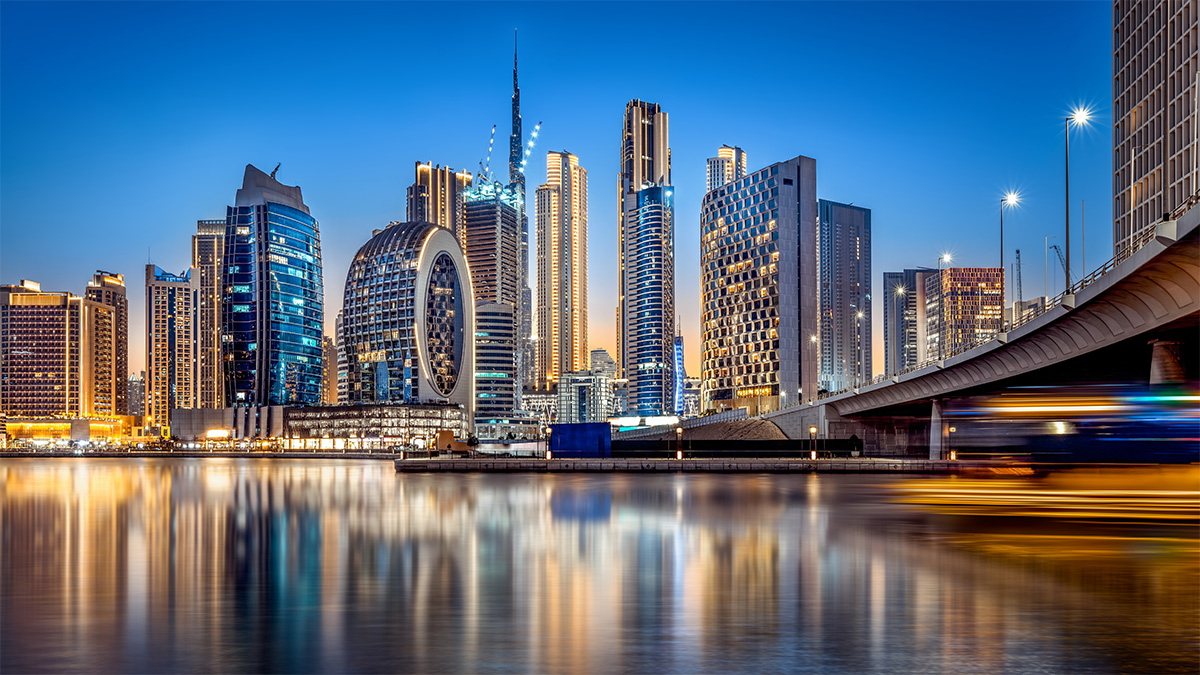
Dubai’s rise as a global business hub is not accidental. Nor is it the result of geography, timing, or spectacle. Dubai is studied – by investors, governments, and global operators – because it works. It delivers outcomes that other markets discuss at length but rarely achieve.
For outside observers, Dubai is often reduced to visuals: towers, tourism, record-breaking projects. These are real, but incidental. They are outcomes, not causes. The real story is structural. Dubai built a business environment that prioritises clarity, execution, and consistency – and then defended it. What defines the Dubai business model is not ambition alone, but a system built around clarity, speed, and disciplined execution.
In Dubai, doing business is not a by-product of policy – it is a design principle. Regulation is structured to be understood and relied upon. Timelines are commitments, not estimates. Outcomes matter more than intentions. This operational discipline is what separates Dubai from jurisdictions that promise reform but struggle to convert it into advantage.
This is why Dubai attracts capital with choice. Institutional investors, multinational firms, family offices, and founders do not come for novelty. They come because the rules of engagement are visible, stable, and enforced.
Crucially, the system is not static. It evolves – but it does so cleanly. Changes are signalled, consolidated, and applied with intent. This legibility matters more to decision-makers than policy theatre. Over time, predictability becomes an advantage: reducing risk, accelerating planning, and aligning expectations across markets.
The lesson is simple. Business systems that respect certainty, execution, and consistency outperform those that prioritise complexity, ambiguity, and optics. In a world of stretched leadership teams and mobile capital, clarity is not helpful – it is decisive.
Clarity over complexity: Why Dubai’s business system scales
One of Dubai’s most underappreciated business advantages is its refusal to confuse complexity with sophistication. While many mature economies have allowed regulation to become layered, interpretive, and contradictory, Dubai has simplified it – deliberately.
This is not deregulation. It is structural clarity. Licensing categories are defined. Ownership rules are explicit. Tax frameworks are published and applied consistently. Most importantly, businesses can understand the system without intermediaries explaining what it really means.
Elsewhere, regulation has become self-perpetuating. Rules multiply faster than guidance. Interpretation varies by authority and individual. Faced with these challenges, businesses tend to prioritize legal caution over speed, leading to defensive and sluggish decision-making. Dubai recognised this cost early and chose a different trade-off.
By prioritising clarity, friction was removed from decision-making. Boards commit faster. Capital deploys with confidence. Executives focus on growth rather than compliance choreography.
This clarity is enforced by discipline. Rules are not endlessly renegotiated by exception. Outcomes are consistent even when unfavourable. Businesses may disagree with decisions, but they understand them – and that distinction is foundational to trust.
The uncomfortable reality for other markets is this: complexity often survives because it benefits those who interpret the system, not those who use it. Dubai optimised for founders, operators, and investors instead. Markets that are easiest to understand are often the hardest to outperform.
Time as a strategic asset, not a casualty
In most markets, time is rarely treated as an economic input in business policy. It should be. Delay, drift, and uncertainty are among the most expensive costs businesses absorb – and many systems normalise them. Dubai does not.
From formation to licensing, immigration, and operations, Dubai designs for momentum. Processes move, decisions land, and timelines are structural, not aspirational. This differentiates it from jurisdictions where progress is measured in phases rather than outcomes.
The compounding effect is significant. Founders preserve runway, teams onboard faster, and projects reach execution without attrition. Investors gain confidence not just in assets, but in the market itself.
Dubai understands that speed is not recklessness when paired with structure and enforcement. It narrows grey areas where cost and error accumulate. It also forces institutional discipline by preventing responsibility from dissolving across committees and calendars.
This respect for time is cultural as much as procedural, with authority clear, escalation defined, and resolution valued over prolonged consultation. Commercial reality is acknowledged, not deferred.
As capital becomes more selective and volatility increases, time is emerging as a competitive edge. Dubai treated speed as infrastructure – and built accordingly.
Pro-business does not mean unregulated
Dubai’s pro-business reputation is often misread as regulatory permissiveness. This assumption usually comes from systems where regulation has become symbolic rather than functional. Dubai demonstrates the opposite.
It is not lightly regulated – it is precisely regulated. Compliance frameworks covering licensing, financial conduct, AML, and governance are structured, enforced, and aligned with international standards. The difference is not fewer rules, but fewer unknowns.
In many markets, regulation accumulates without consolidation. Old rules persist alongside new ones, creating interpretive risk. Dubai has been selective. Updates tend to clarify rather than complicate, preserving usability without sacrificing credibility.
Serious capital prefers this model. Institutional investors and regulated entities do not seek laxity – they seek predictability. Clear expectations, consistent enforcement, and controlled reputational risk matter more than leniency.
By drawing firm boundaries and enforcing them, Dubai reduces uncertainty rather than redistributing it. Businesses know where they stand. Regulators know where accountability sits. Problems are resolved within systems, not improvisation.
The lesson is direct: pro-business environments regulate intelligently. Dubai’s framework is quiet, functional, and effective. In global commerce, functionality always outperforms theatre.
Government as enabler, not obstacle
In many economies, business and government operate in tension. Policy is disconnected from execution, and institutions are rewarded for process over outcome. Dubai chose a different alignment.
Government functions as an enabler. Oversight exists, but incentives are aligned toward activity and resolution. Entities coordinate, authority is defined, and projects move from approval to execution without institutional drag.
This is most visible where other markets stall: infrastructure, real estate, logistics, immigration, and financial services. Escalation paths are clear. Accountability is identifiable, and uncertainty caused by bureaucratic opacity is reduced.
This alignment is one of the defining reasons why Dubai consistently ranks as one of the most attractive places in the world to set up and scale a business.
Long-term planning reinforces this model. Dubai is not constrained by short political cycles. Its economic strategy spans decades, allowing regulation, infrastructure, and capital markets to develop in concert. This continuity attracts patient capital.
Policy design also begins with a practical question: How will this work? Not how it will be positioned or defended, but how it will function. That operational bias shapes institutional behaviour throughout the system.
Competitiveness does not come from summits or slogans. It comes from governments that understand how business operates. Dubai’s advantage lies in consistency, not commentary.
A global mindset from day one
Dubai did not build locally and adapt later. It was designed for global users from the outset – founders, investors, and executives without domestic history or networks.
Legal structures, ownership rules, capital frameworks, and dispute resolution were built to treat cross-border activity as standard. There is no separate track for foreign participation. The system assumes international commerce.
Many markets claim openness while preserving friction: ownership caps, opaque approvals, inconsistent enforcement. Dubai removed these early and adjusted quickly when they hindered growth.
The result is a market comfortable with scale. Multinationals, regional headquarters, family offices, and first-time founders operate within the same framework. Talent moves easily, capital structures remain flexible, and business models travel.
Dubai also maintains strategic neutrality. It offers a platform rather than an ideology. As geopolitics fragments and trade routes shift, this neutrality has become a material advantage.
Designing for the world requires more than intent. It requires systems that work equally well for outsiders. Dubai understood this early and positioned itself accordingly.
The cultural advantage: Execution over optics
No system functions without the culture that supports it. Dubai’s commercial edge is reinforced by a bias toward execution rather than display.
Decision-making authority is clearer. Responsibility is assigned. Consultation exists, but it does not replace action. Progress matters more than posture.
Elsewhere, business decisions are increasingly shaped by optics – commentary, positioning, narrative management. Dubai remains focused on delivery, with infrastructure built and frameworks implemented. Institutions are judged on performance, not explanation.
This approach reflects confidence in structure. When rules are clear and enforcement consistent, decision-makers act without excessive hedging. That confidence encourages commitment rather than caution.
Dubai rewards seriousness. It does not romanticise failure, nor punish decisive action within the rules. In an uncertain global environment, this cultural clarity is increasingly rare – and increasingly valuable.
What other markets get wrong when they try to copy Dubai
Dubai is often imitated superficially. Incentives are imported without infrastructure, free zones are announced without institutional alignment, and speed is promised without authority.
The most common error is treating incentives as strategy. Tax reductions and ownership reforms are layered onto fragmented systems. Regulation remains slow, interpretive, and opaque. On paper, markets appear competitive, but in practice, they are not.
Partial adoption worsens the problem. Parallel regimes create confusion rather than clarity, and businesses navigate multiple authorities and unresolved contradictions – conditions Dubai worked deliberately to remove.
Most critically, intent is underestimated. Dubai’s environment is the product of sustained alignment across institutions. Without that cohesion, imitation produces form without function.
Dubai’s advantage is systemic, not transactional. Trust compounds through delivery. Consistency becomes reputation. Shortcuts do not.
The real lesson is discipline
Dubai’s success rests on discipline, favouring clear systems over clever ones and choosing execution over explanation. There is respect for time, capital, and decision-making.
The emirate did not eliminate risk – it made it visible, with legible rules and navigable processes. Outcomes were broadly aligned with intent, and over time, this created trust – and trust attracted serious capital and commitment.
Competitiveness is rarely lost suddenly. It erodes through fragmentation, hesitation, and tolerated inefficiency. Dubai confronted those weaknesses directly and designed around them.
Not every market can be Dubai. Context matters. But the principles are transferable: clarity over complexity, speed with structure, regulation that works, and governance that understands business.
Capital and talent move toward systems that function. Dubai recognised this early. Others should look beyond the skyline – and study the Dubai business system behind it.
Opinion
Getting it right: What the world can learn from Dubai’s business model