There’s a familiar moment that rarely attracts attention, yet plays out countless times each day. You tap a screen and hear a restrained click. A notification arrives with a soft tone rather than a sharp interruption. A car door closes with a sound that feels deliberate, controlled, final. You don’t stop to analyse it. You don’t consciously register what just happened. But something settles. That moment isn’t accidental – it’s engineered.
Before we process visuals, before we read messages or absorb marketing claims, we hear. Sound reaches the brain faster than sight and begins shaping judgement long before conscious reasoning has time to engage. In that brief interval, perception is formed. Confidence, quality, credibility – or their absence – are registered instinctively. Sound, in this sense, isn’t a feature. It’s a signal.
How sound shapes perception before thought
From a psychological standpoint, sound occupies a privileged position in human cognition. Auditory information is processed rapidly and emotionally, closely linked to memory, mood, and threat detection – systems that evolved to keep us safe long before branding, interfaces or advertising existed.
This is why sound triggers reactions before explanations. A sudden noise elevates alertness, a calm tone lowers it, and a familiar sound reassures. The brain treats sound as information about intent, proximity, and reliability, not as ornamentation.
That wiring remains intact. Today, sound still functions as a shortcut for evaluation. A controlled, balanced sound suggests intention and care, while a sharp, hollow, or intrusive one introduces discomfort, even when the cause is difficult to articulate.
Crucially, these judgements precede conscious reasoning. Psychologists describe this as affective priming: emotional cues shaping perception before rational thought engages. The impression is formed first. Logic, if it arrives at all, follows later. We don’t decide that something feels premium – we feel it, and only afterwards do we attempt to justify that sensation with words.
For marketers, the implication is significant. Sound doesn’t persuade through argument – it persuades through sensation.
Sound as a proxy for quality
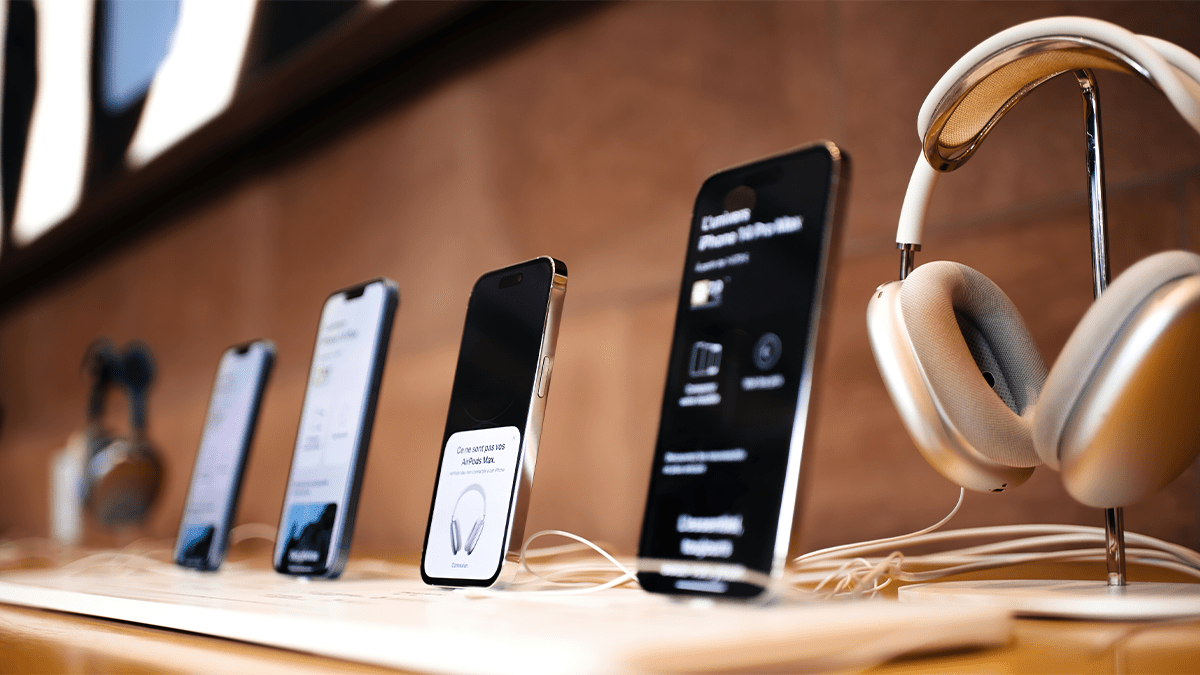
High-quality brands rarely rely on sound to command attention. Instead, they use it to provide reassurance. Consider the familiar click of a well-designed Apple keyboard or trackpad. That sound isn’t merely feedback. It’s calibrated restraint, confirming action without demanding focus. Over time, it conditions trust. The interface feels dependable, considered, intentional.
The same principle is evident in automotive design. The door of a premium vehicle, like an Audi A8, is engineered as deliberately as the drivetrain or suspension. Engineers focus on resonance, resistance, and frequency – not because these affect performance metrics, but because they shape belief. A hollow sound undermines confidence, while a controlled, weighted thud reinforces safety and precision before the engine even starts.
The distinction isn’t volume or novelty, but control. Sound signals whether a brand trusts its own intent.
Premium experiences tend to sound restrained for this reason. They avoid unnecessary interruption or explanation. Their auditory cues are measured, consistent, and predictable, reinforcing a sense of order and assurance over time.
The sound itself often goes unnoticed. What remains is the impression it leaves behind: reliability, without effort.
Sensory branding beyond visuals
Branding discourse continues to prioritise the visual. Logos, typography, colour systems and layout grids are all important, but none is sufficient on its own.
Sound behaves differently. It doesn’t wait to be interpreted – it’s absorbed immediately. In digital environments in particular, sound functions as emotional UX, a confirmation chime that signals completion, or a restrained warning tone that suggests caution without urgency. The distinction between progress and failure is communicated before a single word appears on screen. These micro-signals shape confidence more powerfully than most visual cues.
Consider voice-led platforms. The neutral, measured cadence of Amazon Alexa is carefully calibrated to feel supportive rather than directive, present without becoming intrusive. It’s deliberately human-adjacent, stopping short of imitation. That distinction is critical – voices that sound overly mechanical feel distant, but those that sound too human can trigger unease.
In this space, tone, pacing, and warmth act as cognitive trust signals. The paradox is simple: well-designed sound disappears into the experience, and poorly designed sound demands attention.
Sound, AI, and the push toward human likeness
As artificial intelligence becomes increasingly present in customer-facing roles, sound is carrying more psychological weight. Voice assistants, navigation systems, and automated support agents all rely on tone to signal competence and intent.
Here, sound performs a delicate balancing act. Again, an overly mechanical voice feels cold, while one that sounds too human is unsettling. The most effective designs strike a balance: measured, neutral, human-adjacent. Small variations in pacing, warmth, and emphasis influence whether an interaction feels cooperative or transactional. Sound performs trust-building work long before content has an opportunity to do so.
This isn’t about anthropomorphism, but cognitive comfort. Once again, sound establishes trust before content has an opportunity to intervene.
The marketing implications
Marketing doesn’t create trust in isolation – it reinforces what the experience already communicates. If a brand claims precision but sounds careless, the disconnect is immediate. If a product positions itself as premium but communicates through harsh, generic alerts, doubt quietly sets in. Sound becomes the referee between promise and delivery.
This detail is particularly important in high-consideration environments, where trust, longevity, and seriousness matter. Sound often delivers the first proof point, long before a campaign is read or a value proposition is fully understood.
Why this resonates in the Gulf
In the Gulf, consumers are highly attuned to the signals of intent and quality. Products and platforms are rarely judged on functionality alone – they’re assessed as expressions of taste, seriousness, and long-term value.
Sound plays directly into this evaluation. The way a car confirms it is locked. The tone a banking app uses to signal completion. The restraint of an interface that understands when silence is appropriate. These moments inform how quality is perceived and shared. Subtlety, control and consistency matter.
When sound feels intentional, it aligns naturally with regional expectations of excellence and permanence.
The risk of leaving sound to chance
Every brand has a sound, whether it has been consciously designed or not. Default tones, inherited system alerts, inconsistent feedback – all communicate something, even unintentionally.
Leaving sound to chance isn’t neutral. It’s a decision to delegate a powerful perceptual signal to randomness. And once a negative association forms, it’s difficult to reverse.
This doesn’t mean sound should be louder or more prominent. Often, it means the opposite. Thoughtfully designed sound supports the experience quietly, reinforcing confidence without drawing attention to itself.
The feeling that lingers
We like to believe our decisions are rational. However, in practice, many are shaped by subtle noises that occur before conscious thought intervenes. A sound that reassures, a tone that feels balanced, a signal that confirms competence.
If the auditory experience feels right, most of the work has been done. Long before a brand is judged on what it says, we have already judged it on how it sounds.
Opinion
Did you hear that? Why sound is the most underrated brand signal