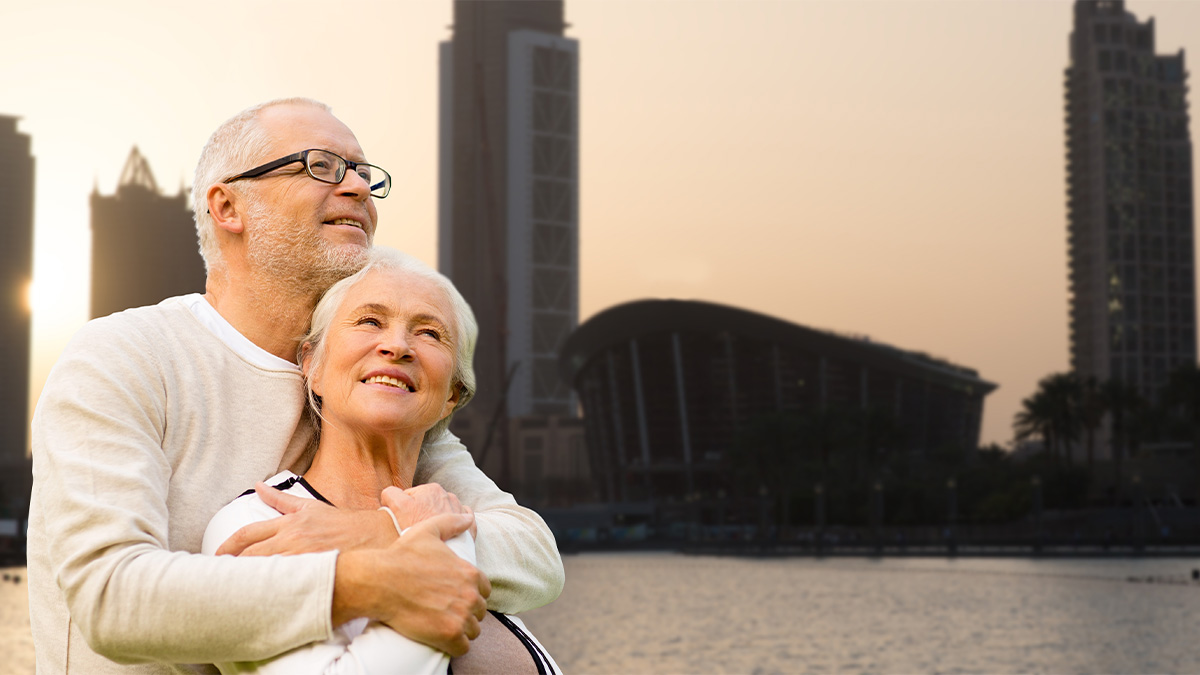
Living in Dubai has been one of the great chapters of my family's life. The UAE gave us something genuinely rare: a safe, open environment to raise children, build a career, and put down real roots in a community that, despite drawing people from every corner of the world, feels remarkably cohesive. For all the noise about regional geopolitics and global uncertainty, this place has remained, for us, one of calm and possibility.
And yet there has always been a persistent question underneath it all, one that gets harder to ignore as you get older: for how long?
It is not a question born of dissatisfaction – it is one born of the uncomfortable knowledge that the structures that would allow long-term expats to truly commit to the UAE as a permanent home, to stop thinking of themselves as visitors on an extended stay, are not yet fully in place.
The ticking clock
The UAE is home to nearly 11.5 million people. Around 88% of them, almost 10 million individuals, are expatriates. That is a staggering number of people who have built lives, bought furniture, enrolled children in schools, and established friendships here, all while knowing, at some level, that their tenure is conditional.
The Golden Visa has been a meaningful step forward. A 10-year, self-sponsored residency has given many long-term residents, such as investors, professionals and specialists, genuine breathing room. But even with a Golden Visa, the underlying question does not fully disappear. It just defers.
For expats now in their fifties and sixties, many of whom have been here for two or three decades, the question is becoming more immediate. Ageing parents back home demand regular flights and extended visits. And the realities of later-life support start to come into sharper focus. While the UAE has made significant strides in healthcare and continues to invest in how it supports an ageing population, access to subsidised social care and nursing provision remains limited for most expatriates. It’s something that tends to feel more abstract early on but becomes harder to ignore over time.
The property question compounds things further. Do you buy, knowing you may eventually have to sell and leave? Do you keep renting indefinitely, pouring money into a market that offers no long-term security? For many expats, there is no clean answer.
Healthcare is world-class – but there are gaps
It would be wrong, and frankly unfair, not to acknowledge how far the UAE's healthcare system has come. Primary and secondary care here are genuinely world-class in many respects. The infrastructure is modern, the talent is international, and the ambition is real – as reflected in healthcare spending, which EY projections suggest will reach around 5.4% of GDP.
Tertiary and specialist care continue to improve. Individual geriatric services are beginning to emerge – Clemenceau Medical Center Dubai has established a dedicated geriatric center of excellence, reflecting a wider shift as hospitals begin linking elderly care with remote monitoring and chronic disease management to keep patients stable and avoid acute flare-ups. While this signals meaningful progress, it remains early-stage and fragmented.
Palliative care remains available in only a handful of hospitals. Integrated, graduated care for older people that allows someone to move seamlessly from independent living to assisted living to nursing care, all within a single community, is almost entirely absent. And critically, there is no compulsory savings or insurance mechanism that allows the average long-term expat to plan financially for that stage of life.
This is not a criticism but a demographic reality. The UAE has historically been a young country, with a median age of around 33, skewed significantly by the working-age expat population. The problem of ageing has not yet reached critical mass here. But it is coming. EY's analysis projects that by 2050, some 16% of the UAE population will be over 60 – a transformation from a nation of young professionals to one that must seriously grapple with long-term care at scale.
What would it take to make the UAE retirement-friendly?
This gap represents a significant opportunity for the UAE's private healthcare and investment sectors. Three things seem to me both necessary and achievable.
The first is a deeper residency framework. The Golden Visa is an excellent foundation, but it remains primarily designed for investors and high-earning professionals. What is missing is a pathway for the loyal, long-term resident, someone who has lived here for 15 or 20 years, raised children here, contributed to the economy here, that does not require a property portfolio of AED 2 million or a monthly salary of AED 30,000 to qualify. A more accessible long-term residency tier, perhaps linked to years of contribution rather than purely to wealth, would fundamentally change the psychology of staying.
The second is a compulsory long-term care savings mechanism. This is not as radical as it sounds. A modest monthly contribution, deducted from the moment someone establishes residency, held in a portable, individually-owned fund, not a tax, but a structured investment in one's own future care. If someone leaves the UAE after five or ten years, the fund returns to them. If they stay, it grows to underwrite future healthcare costs, assisted living, or residential nursing care. The actuarial logic is sound. The voluntary model has been tried and has failed, in the UAE and elsewhere, primarily because families in their thirties and forties have competing financial pressures and will not voluntarily prioritise something thirty years away. Compulsion, however, gently applied, is the only mechanism that works at scale.
The third, and the one I feel most strongly about as someone in healthcare, is investment in integrated retirement communities. Not nursing homes in the traditional sense. What has transformed the landscape in the UK, Australia, and parts of Southeast Asia is the “extra care” model. These are purpose-built communities where residents live independently in their own homes, while having access to on-site care that can scale as their needs evolve. These developments typically offer self-contained apartments for purchase or rent, with care staff available 24 hours a day and support that can extend to dementia and complex needs, all without requiring residents to relocate as their condition changes.
In ownership-based models, the value of the property can also help structure or offset the cost of care over time, reducing some of the financial uncertainty that otherwise shadows later life.
Presently, there is very limited housing in Dubai focused exclusively on retirees with this level of integrated care built in. The market gap is significant, and the demand, from a growing population of over-55s, of whom expats represent almost 92% in Dubai, is already there.
The bigger opportunity
There is an economic argument here as powerful as the human one. A UAE that can credibly say to a 40-year-old professional, "You can build your entire life here, and we will look after you when the time comes", is one that retains not just labour and talent but capital, loyalty, and multigenerational commitment. The 10 million expats currently planning their eventual departure are also 10 million potential long-term residents, property owners, and healthcare consumers.
The private sector has a pivotal role to play alongside government. The UAE has world-class insurers, developers, investment groups, and, critically, healthcare institutions with the expertise, credibility, and relationships to help design and deliver this ecosystem. The pieces are there. What is needed is the will, and the collaboration, to assemble them.
Many of us who came here for a few years and stayed for decades have watched our home countries change beyond recognition. The communities we left are not always ones we could return to. The UAE, for all its youth and dynamism, is, if it chooses to be, ideally placed to become something rare: a place where people do not merely visit for the best years of their lives, but choose, freely and with confidence, to stay for all of them.
That is the UAE I want to grow old in. I suspect I am not alone.