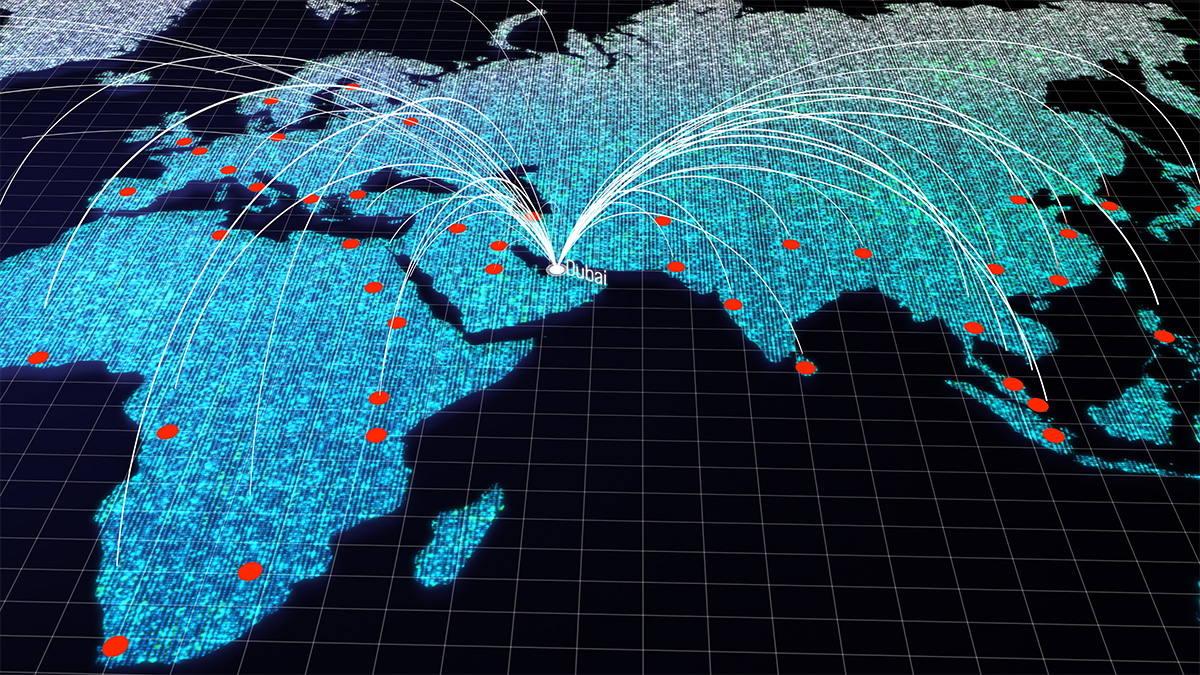
Moving money between Asia and the West is no longer straightforward. Chinese investment in the US and Europe has come under heavy regulatory scrutiny. Geopolitical tensions have made direct deals complicated. A lot of capital that previously moved in a straight line is looking for a different route.
The Gulf has positioned itself as that route. Dubai and Abu Dhabi are actively building the financial infrastructure, institutional relationships and political credibility to serve as intermediaries between Asian capital and Western markets. Whether this holds in the long term is yet to be seen. But the foundation being laid is more serious than most people outside the region appreciate.
The right jurisdiction at the right time
DIFC in Dubai and ADGM in Abu Dhabi are not just free zones with tax advantages. They operate under English common law, with independent courts and regulatory standards that Western institutional investors recognise and trust. For Asian capital, Chinese family offices, Indian wealth managers, Southeast Asian conglomerates, structuring through a DIFC or ADGM entity offers a neutral, reputable jurisdiction that does not raise flags in Western deal processes the way a direct approach might.
This positioning has been carefully orchestrated. DIFC was founded in 2004, and ADGM followed in 2015. Both were deliberate, long-term investments in exactly this kind of credibility. It takes years to build a legal system, a regulatory track record, and a roster of global banks and law firms willing to operate within a jurisdiction. The Gulf did the work. The current geopolitical climate is now making that work pay off.
Asian capital needs a new front door
The most visible flow right now is Chinese. Outbound Chinese investment in Western markets has contracted sharply under scrutiny from regulators in the US and Europe. Private Chinese capital and family offices are relocating to Dubai in meaningful numbers, drawn by the tax environment, the residency frameworks, and access to Western financial institutions through a jurisdiction that carries no political baggage. For many, Dubai is filling the role that Hong Kong once played: a stable offshore base from which to engage with the rest of the world.
But it goes beyond China. Indian family offices are diversifying internationally at pace, and the UAE’s deep commercial ties to India make it a natural staging point. Gulf-India trade reached USD 91 billion in 2024, boosted by the UAE-India trade agreement signed in 2022. Southeast Asian capital is moving through the region too. The common thread across all of it: the Gulf gives Asian investors access to Western markets and Western institutions without the friction of going direct.
Western investors need a safer route east
The demand runs in both directions. US and European fund managers want exposure to Asian growth markets such as India, Southeast Asia, and, selectively, China; but direct investment carries regulatory complexity, reputational risk, and geopolitical exposure that many boards are no longer comfortable accepting.
Co-investing alongside a Gulf sovereign wealth fund changes that. Gulf funds have spent years building relationships and offices across Asia – PIF in Hong Kong, Mubadala and QIA in Singapore, and ADIA’s dedicated India and China teams. These institutions understand the markets, have the relationships, and provide a layer of political insulation that a Western firm investing directly cannot replicate. For a European PE firm trying to access Indian infrastructure or Southeast Asian technology, a Gulf co-investor offers capital, access and cover.
The sovereign funds are the real engine
ADIA, Mubadala, ADQ, PIF and QIA collectively account for close to 61% of total sovereign wealth fund investment globally. In 2024, the top five Gulf funds deployed over USD 180 billion across global markets. Mubadala alone completed more than 300 deals in the past five years and was ranked the world’s most active sovereign wealth fund.
These funds sit on both sides of the equation. They have deep co-investment relationships with the biggest Western private equity and infrastructure firms, including Blackstone, Bain Capital, Global Infrastructure Partners and BlackRock, among others. They are simultaneously building Asia portfolios and Asia offices. In a world where direct East-West capital flows have become politically complicated, the Gulf funds are uniquely placed to connect the two, and they know it.
Neutrality is an asset
The UAE and Saudi Arabia have worked hard to maintain workable relationships with Washington and Beijing. This is not easy, and it is not passive. It is a deliberate foreign policy posture that requires ongoing management and occasional difficult choices. But the commercial dividend is that Gulf states can sit across the table from American PE firms and Chinese sovereign investors in the same week without either side walking out.
Beyond diplomacy, practical advantages cement this role. The Gulf sits neatly between Asian and European trading hours, profits from a large South Asian diaspora that provides language and cultural reach in both directions, and maintains a business environment that English-speaking Western executives find navigable. While none of these elements alone makes the Gulf indispensable, together they make the region very hard to route around.
What could go wrong?
The risks are real and worth highlighting. If the US-China confrontation intensifies, neutrality may become untenable. Western regulators are increasingly attentive to the role that Gulf structures can play in obscuring the origin of capital, and AML scrutiny is tightening. Singapore is competing directly for the same intermediary role and has its own advantages, such as stricter rule-of-law scores, a deeper tech ecosystem, and a longer track record.
There is also a concentration risk. If a significant portion of the Asian capital currently routing through Dubai originates from a narrow set of sources, any tightening of Chinese capital controls or a shift in Indian outbound investment patterns would be felt immediately. The bridge only holds if both ends remain open.
The bet the Gulf is making
The argument for the Gulf as a structural intermediary, rather than an opportunistic one, rests on the observation that friction in direct East-West capital flows is here to stay. Western regulatory environments are not loosening, geopolitical tensions are not resolving, and the need for a trusted, politically neutral, and legally credible environment to structure cross-border deals is growing.
The Gulf spent two decades preparing for this moment. DIFC and ADGM are mature hubs. Sovereign wealth funds have the capital, relationships, and Asian offices in place, backed by established diplomatic neutrality. The region is not scrambling to capture a sudden trend – it built the infrastructure well in advance and is now watching as others try to catch up to that initial wager.