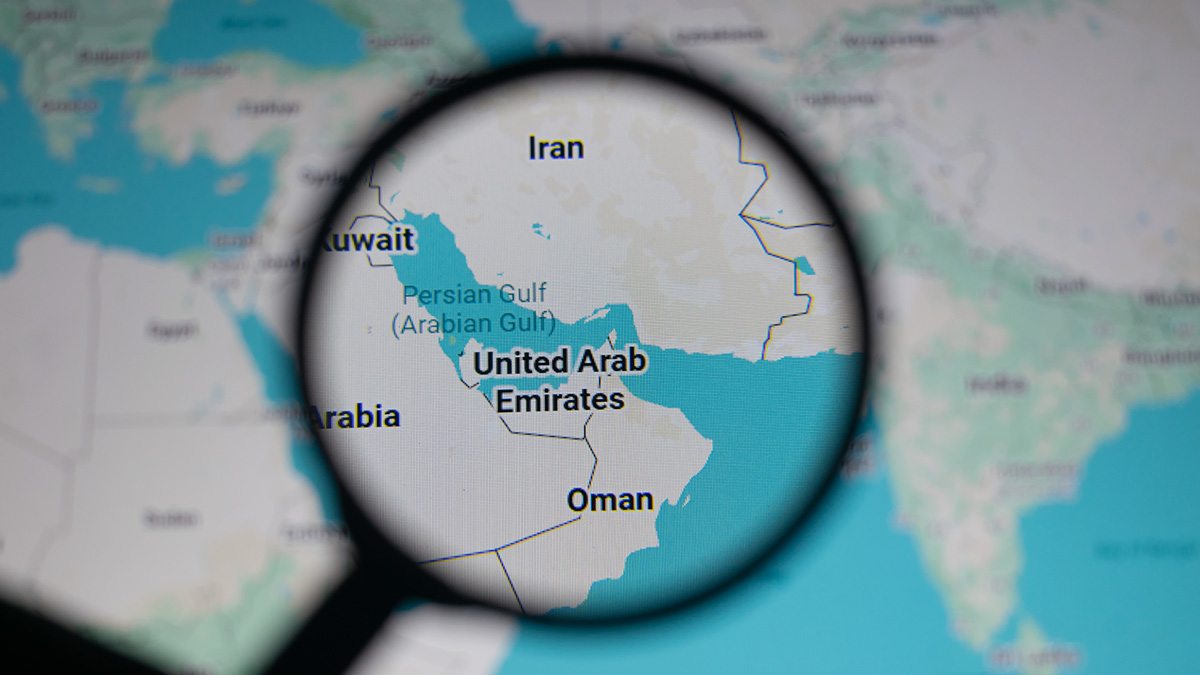
Security in the Gulf is often framed in terms of exposure. The region sits near contested waterways, rival powers, and active conflict zones. Yet by domestic measures – violent crime rates, public order, fiscal reserves, and institutional continuity – the GCC states rank among the most secure operating environments globally. That contrast is deliberate.
Over the past two decades, the UAE, Saudi Arabia, Qatar, Kuwait, Bahrain, and Oman have invested heavily in internal security, sovereign wealth buffers, infrastructure, legal systems, and diplomatic balance. Stability has been constructed.
While several major Western economies grapple with rising urban crime, political volatility, and policy reversals, the Gulf presents a different model: centralised authority, enforcement clarity, long-term planning, and deep fiscal insulation. Security here is structural.
Crime and personal safety: The data
By global benchmarks, Gulf cities consistently sit in the top tier for personal safety. Abu Dhabi, Dubai, and Doha typically score above 80 out of 100 on Numbeo’s Safety Index, often 15–30 points higher than major Western capitals. In the Gallup Global Law and Order Index, the UAE has ranked among the highest-rated countries worldwide, with more than 90% of residents expressing confidence in local police and reporting that they feel safe walking alone at night.
UN Office on Drugs and Crime data reflects the same pattern. Homicide rates across most GCC states remain well below 1 per 100,000 inhabitants – far lower than many large Western European and North American urban centres and orders of magnitude lower than in Latin America and Africa.
Petty crime exists, but violent street crime is uncommon: public disorder is limited and large-scale disturbances are unusual. Transport systems run late into the evening, major events conclude without incident, and neighbourhoods remain active after dark.
Security becomes background rather than calculation. That shift alters daily life.
Governance and legal clarity
Security begins with governance. Across the GCC, leadership structures reduce abrupt policy swings. Regulatory changes still occur – corporate tax in the UAE is one example – but they are typically signalled in advance and phased in. Businesses are rarely confronted with overnight reversals that reconfigure the rules of the game.
That consistency matters. In some Western markets, tax regimes, environmental policy, or foreign ownership rules can shift meaningfully within a single electoral cycle. Even when institutions remain strong, the policy climate can swing. Investors price in that uncertainty; companies build contingencies around it.
National strategies such as Saudi Arabia’s Vision 2030 are designed to span decades. The direction may evolve, but the architecture tends to remain intact.
Legal frameworks have matured alongside economic expansion. Dubai’s financial courts and Qatar’s international court systems operate under common law principles and are widely used by multinational firms. Arbitration mechanisms have been formalised, and foreign ownership rules have broadened over time, particularly in real estate and strategic sectors, reinforcing legal certainty.
Enforcement underpins all of this: rules are applied visibly; public disorder is addressed quickly; and minor infractions rarely escalate.
For investors, that procedural stability lowers risk friction. Contracts are more resilient here, supporting longer-term strategic planning.
Energy wealth and fiscal buffers
Fiscal capacity underwrites stability. The Gulf holds close to a third of the world’s proven oil reserves and major natural gas assets. Revenues have funded sovereign wealth institutions managing assets in the trillions of dirhams: Saudi Arabia’s Public Investment Fund, Abu Dhabi’s entities, and Qatar’s investment vehicles provide both global reach and domestic liquidity support.
When oil prices fall or global downturns hit, Gulf governments have generally sustained infrastructure spending, supported currency pegs to the US dollar, and avoided abrupt austerity.
Economic stress is a common precursor to social instability worldwide; severe unemployment, currency collapse, and fiscal crises are frequently associated with unrest elsewhere. The Gulf’s reserves reduce those pressures.
Diversification strategies – including Saudi Arabia’s Vision 2030 and comparable strategies in the UAE and Qatar – aim to reshape long-term dependence on hydrocarbons. But transition takes time. Fiscal buffers provide it. Security, in this sense, is financed.
Maritime and strategic geography
The Strait of Hormuz carries roughly a fifth of globally traded oil. Disruptions would reverberate immediately through energy markets. Gulf states have therefore expanded naval patrol capability, coastal monitoring, and intelligence coordination. Maritime security is treated as an economic safeguard, not just a military responsibility.
At the same time, ports such as Jebel Ali, Hamad Port, and King Abdullah Port operate as major logistics hubs linking Asia, Europe, and Africa. These are not secondary terminals; they are core arteries in global logistics networks. When those ports operate without disruption, confidence holds. When shipping routes stay open, fiscal planning becomes more predictable.
In an era shaped by supply chain stress, stable trade corridors carry measurable value.
Internal security infrastructure and technology
Walk through central Dubai, Doha, or Riyadh late in the evening, and the security presence is visible but not intrusive. Patrol presence across transport hubs and major commercial zones signals order without dramatisation.
Behind it sits integrated infrastructure. Command centres link traffic systems, emergency services, municipal authorities, and surveillance networks in real time; cameras are widespread across transport corridors and public areas; and traffic violations are often detected automatically. Data is used to anticipate congestion and monitor incidents and crowd patterns before they escalate.
Despite these levels of oversight, daily life does not feel militarised. Major events – from global expos to international sporting tournaments – proceed with firm but measured control. Technology allows security systems to scale alongside rapid urban growth without relying solely on manpower.
Political stability and continuity
Political volatility drives risk pricing globally. In the Gulf, leadership transitions are typically structured, and policy direction remains steady. National development strategies – whether infrastructure expansion, industrial policy, or diversification away from hydrocarbons – span decades rather than electoral terms. Infrastructure expansion and economic reform continue through regional turbulence.
Geopolitical tensions persist in the wider neighbourhood, but domestically the pattern has remained consistent: institutions function, projects advance, and economic planning continues. For long-term investors, this steadiness reduces one of the more unpredictable variables in global markets.
Crisis response and institutional performance
Security is ultimately tested under stress. Recent global disruptions – from the pandemic to energy market volatility and regional tensions – saw Gulf governments act quickly, often through centralised communication and coordinated execution.
Inter-agency coordination among health authorities, police, transport operators, and financial institutions is typically pre-established. When measures are announced, implementation follows rapidly, and public compliance has typically been high. Over time, consistency during crisis reinforces trust and trust itself becomes stabilising.
Capital security and financial stability
Security extends to balance sheets. Most GCC currencies remain pegged to the US dollar, which reduces exchange-rate volatility and provides predictability for trade and cross-border investment. For international firms, currency stability removes one layer of macro uncertainty.
Inflation, particularly during recent global supply disruptions, has risen in the region – but generally without the sustained double-digit levels seen in parts of Europe, Latin America, or Africa. Fiscal reserves have enabled governments to buffer against inflation shocks.
Property ownership rules are codified. Foreign direct investment regulations have expanded steadily, particularly in the UAE and Saudi Arabia, where 100% foreign ownership is now permitted across many sectors.
None of this removes risk. Markets remain exposed to oil prices and global cycles. But volatility is often contained rather than amplified. For capital, containment is often enough.
Realities and regional risk
The Gulf operates in a sensitive neighbourhood. Tensions with Iran, periodic instability in parts of the wider Middle East, and energy market swings remain structural realities.
Shipping routes remain vulnerable to escalation, and diplomatic balance requires constant calibration. What differentiates the region is domestic containment. Over decades – including the Iraq conflict, the Arab Spring, oil price collapses, and more recent regional flare-ups – major Gulf cities have remained orderly. Infrastructure build-out has continued, and capital inflows have fluctuated but not collapsed. Risk has not disappeared – it has been managed.
Final thoughts
Measured by crime data, fiscal strength, currency stability, and institutional performance, the Gulf compares favourably with many larger and longer-established economies.
In an era marked by political fragmentation and urban disorder elsewhere, steadiness carries economic weight. Companies expand where regulation feels durable, families relocate where daily life feels manageable, and capital gravitates toward jurisdictions where volatility is limited rather than amplified.
Proximity to instability has not produced domestic fragility. Instead, it has produced a regional model in which order functions as leverage – and, over time, leverage reshapes perception.
Opinion
Security in the Gulf: Stability as strategy in an unstable world