Make the world smaller. For most of the last few decades, global business has been built around this simple idea. Companies could manufacture wherever costs were lowest, source from wherever supply was most efficient, sell into increasingly open markets and move capital across borders with relatively little friction. The goal was scale and efficiency. If something could be done once and used everywhere, so much the better.
That model has not disappeared, but it is becoming harder to sustain. Trade tensions, shifting alliances, sanctions, tariffs, supply-chain disruption and different regulatory regimes are making the global economy more complicated. At the same time, economic influence is spreading across a wider group of countries and regions. Asia, the Gulf, Africa and other emerging markets are playing a larger role in global trade and investment. The result is not the end of globalisation; in many respects, global trade is still growing, but it is changing its shape.
UN Trade and Development’s latest figures show global trade reached a record level in 2025, even as geopolitical tensions and changing trade policies continued to reshape supply chains and trading relationships. In other words, businesses are not retreating – they are learning to operate in a world where there is no longer one straightforward route.
From one global machine to a network of markets
The traditional multinational was designed for integration. A company might have a headquarters, a global supply chain, centralised technology and finance functions, and broadly consistent operations across multiple countries. While that structure delivered considerable advantages, it also created dependencies. If one supplier was disrupted, or one market became inaccessible, the effects could travel through the entire organisation. The very efficiency that makes such a system attractive could also make it vulnerable.
Consequently, businesses are starting to think differently about what “global” means. Rather than building one highly integrated system and expecting it to work everywhere, companies are creating more regional capacity and flexibility. Manufacturing may be distributed across several countries. Supply chains may have alternative routes. Sales and operations may be organised around regional markets rather than a single global model.
McKinsey’s research into changing trade patterns shows that trade is increasingly being reconfigured along geopolitical lines, although not uniformly. Some major economies are trading more with politically aligned partners, while countries such as India, Brazil and members of ASEAN continue to trade across different geopolitical groupings. The emerging world is not neatly dividing into two or three separate economic blocs – it is becoming more complicated than that. The multinational of the future may therefore be less like one enormous global machine and more like a globally connected network, with enough regional independence to adapt when conditions change.
Optionality is becoming a business advantage
For years, duplication was something businesses tried to eliminate. Why maintain two suppliers when one can do the job? Why operate two distribution centres when one can serve the region? Why hold excess capacity when demand can be forecast?
The answer is that some duplication is now worth paying for. Having another supplier, another market, another logistics route or another operating base gives a company options when circumstances change. That doesn’t mean every company needs to build an expensive duplicate of its entire operation. It means resilience is increasingly being considered alongside efficiency when decisions are made.
Trade routes are changing as governments introduce new trade policies and businesses adjust their supply chains. For companies, that makes flexibility more important. A supplier, market or route that makes sense today may not be the best option a few years from now. That means businesses need to build more room to adapt. Having alternative suppliers, markets and routes can cost more, but it can also make the business less vulnerable when conditions change.
The return of geography
Perhaps one of the less obvious consequences of a multipolar economy is that location is becoming important again.
Digitalisation was supposed to make geography less relevant. A business could reach customers anywhere, hire talent across borders and coordinate operations from almost anywhere. That remains true; but where a company is based can increasingly affect how easily it can access markets, capital, talent, infrastructure and trade routes.
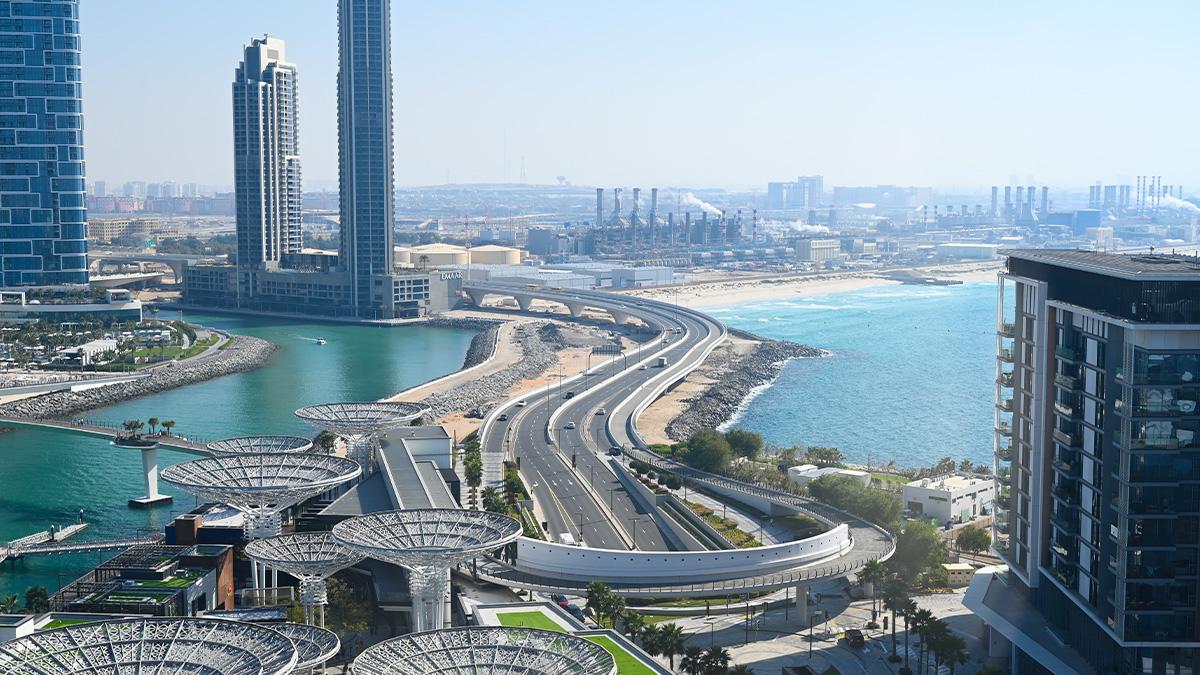
The Gulf offers a prime example of this broader shift. For decades, its geographical position gave it an obvious role in global trade. Increasingly, however, regional economies are trying to turn the location into a more sophisticated economic advantage by building logistics infrastructure, expanding trade agreements, attracting investment and developing sectors beyond hydrocarbons.
The GCC’s expanding network of trade agreements is part of that effort, broadening economic relationships across Asia, Africa and Europe at a time when globalisation itself is becoming more fragmented.
The significance goes beyond the Gulf. In a multipolar economy, geography can become part of a company’s strategy rather than simply its backdrop. This is why businesses are reassessing not just where they sell, but where they establish regional operations, hold inventory, locate technology and data infrastructure, access finance and build partnerships. Jurisdiction is becoming a strategic consideration.
The rise of the connector
A multipolar world also creates opportunities for economies that sit between major markets.
If the world divides into competing economic centres, businesses do not necessarily want to choose one centre and abandon the others. They may instead look for places that allow them to operate across several markets.
This is already visible in the Gulf, where expanding trade relationships and logistics infrastructure are reinforcing its role between Asia, Europe and Africa. It is also visible in the changing role of economies such as India, ASEAN members and others that continue to trade across geopolitical boundaries.
The opportunity is not simply about being geographically well placed. It is about becoming commercially useful as a bridge between markets. The Middle East’s established role as a trading crossroads is increasingly being combined with investment in manufacturing, logistics, digital infrastructure and other higher-value activities.
For businesses, this creates a different way of thinking about international expansion. The best location may not be the largest market, or even the cheapest place to operate. It may be the place that gives the business the greatest number of viable routes to other markets.
Global, but not the same everywhere
Another important change is taking place alongside this. Global businesses are becoming more comfortable with the idea that they cannot operate identically everywhere. A company may want its intellectual property, brand, technology and capital strategy to remain global. But its supply chain, partnerships, regulatory approach, workforce and customer proposition may need to be much more regional. That creates a more modular model of international business.
Global where scale matters. Local where context matters.
This is particularly relevant as businesses encounter different rules around data, technology, investment, taxation, trade and national security. Trying to force every market into one operating model can become less efficient than allowing regional businesses some independence.
The Gulf again provides a useful illustration of this. Businesses in the region are already responding to disruption through new partnerships, markets, channels and business models. Illustrating that companies that can change their configuration without dismantling the whole organisation have an advantage.
A more deliberate kind of globalisation
The phrase “deglobalisation” is being coined, but it’s a little misleading. Businesses are still looking for international customers, international talent, international capital and international growth. What they are less willing to do is assume the world will continue to behave like one integrated market.
The next generation of global businesses may be more geographically distributed, more regionally adapted, and more deliberate about where they place their assets. They may maintain several routes into important markets rather than relying on one. They may build partnerships across different economic spheres rather than committing themselves too closely to one. And they will need to think about geography more strategically.
It’s not about abandoning the efficiencies of globalisation – it’s about balancing them against something that was easier to overlook when the world felt more predictable: the value of choices. For business leaders, that may ultimately be the defining characteristic of operating in a multipolar world. Not being everywhere, and not choosing one side, but building a business with enough reach, resilience and flexibility to move when the world does.