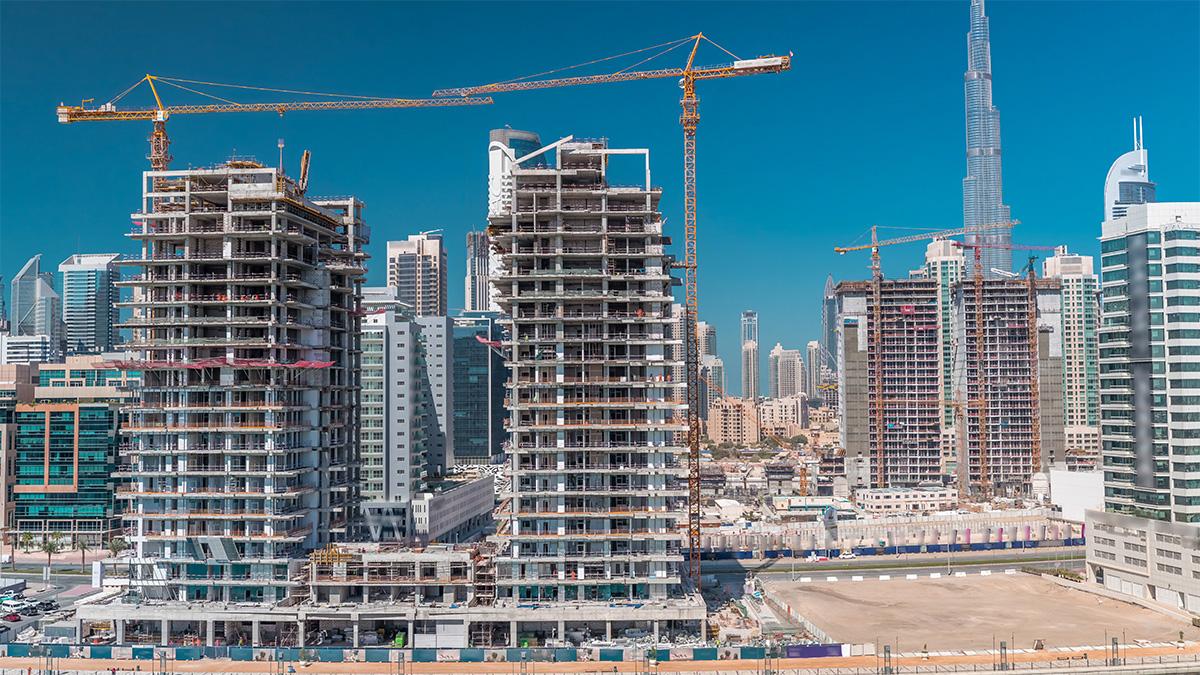
Dubai is adding residents at a remarkable rate. Around 150,000 new people a year are expected to join the emirate through 2030, adding pressure to housing, certainly, but also to the less glamorous infrastructure that makes a growing city work.
This situation creates an interesting question for investors. If everyone is looking at apartments, where are the opportunities created by everything those residents need once they have moved in? People do not simply need somewhere to live. They need schools, doctors, groceries, deliveries, parking, digital connectivity, storage, transport, and somewhere to put all the things that arrive at their front doors.
This is where leveraging the opportunities of population growth becomes so much more interesting than simply investing in residential property.
Dubai's own planning assumptions point to substantial population growth over the coming years, while the emirate is simultaneously investing heavily in transport, infrastructure and economic capacity. When the population expands, the supporting infrastructure has to expand with it. The United Nations expects two-thirds of global population growth through 2050 to occur in cities and towns, putting increasing pressure on the physical systems that support urban life.
For investors, that suggests looking beyond the obvious asset class.
Warehouses are becoming part of the residential story
Consider what happens after somebody orders something online. The package has to come from somewhere. Dubai's growing population, together with its role as a regional trading and logistics hub, is increasing demand for warehouses, distribution centres and increasingly sophisticated last-mile facilities. The most valuable locations are not necessarily the biggest warehouses on the outskirts of the city. Smaller, well-positioned facilities that can get goods closer to consumers can also become increasingly important as delivery expectations rise.
The fundamentals are already visible. CBRE reported that Dubai warehouse rents rose by 12.3% year-on-year in 2026, with demand particularly strong in locations including Dubai Investments Park, Dubai Industrial City, National Industries Park and Dubai South. It also noted continuing shortages of Grade A industrial space.
That makes logistics property an interesting counterpoint to apartments. Rather than betting directly on what residents will pay to live in Dubai, investors can look at the infrastructure required to serve them.
And there is an even more niche opportunity underneath this: specialised storage. Cold storage for food and pharmaceuticals, fulfilment centres for online retailers, small distribution hubs and temperature-controlled facilities are hardly glamorous investments. They can, however, be essential ones.
The next school is not optional
A growing population eventually becomes a growing school population.
Dubai's 2040 Urban Master Plan projects the emirate's population to reach 5.8 million, up from 3.3 million in 2020. Education is already feeling that growth. In the 2024–25 academic year, private-school enrolment rose 6% to 387,441 students across 227 schools, according to Dubai's Knowledge and Human Development Authority (KHDA). The emirate's Education 33 strategy aims to add at least 100 new private schools by 2033.
Knight Frank has taken that demographic and enrolment picture further, estimating that Dubai could need an additional 205,000 private-school places by 2040, equivalent to around 102 schools based on an average capacity of 2,000 students.
For investors, the opportunity extends well beyond the schools themselves. Land in areas where new residential communities are developing can become valuable to education operators. Existing commercial or institutional properties may be suitable for nurseries, early-learning centres or specialist education facilities. There is also an ecosystem around the schools: student transport, sports facilities, tutoring, specialist education and other services all follow the concentration of families.
The broader point is that education demand tends to follow population growth with some predictability. As new communities fill with families, the infrastructure serving them has to catch up.
Healthcare moves closer to the patient
Healthcare offers another version of the same opportunity. A larger population needs more healthcare capacity. But that does not necessarily mean another enormous hospital.
In fact, healthcare in the Gulf is increasingly moving towards more connected networks of hospitals, clinics, diagnostics, pharmacies and digital services. Analysis of the Middle East healthcare sector describes a shift towards integrated delivery networks, with providers increasingly connecting different parts of the patient journey rather than treating each facility as a standalone business.
That creates room for smaller, more specialised assets. A neighbourhood clinic. A diagnostic centre. A rehabilitation facility. A day-surgery centre. A pharmacy in the right location. As Dubai's residential footprint spreads, healthcare provision has to follow.
Data centres are the infrastructure nobody sees
Then there is the infrastructure behind almost everything modern residents do. Every streaming service, online transaction, app, digital government service and increasingly AI-powered application relies on computing infrastructure somewhere.
Data centres are therefore another beneficiary of population growth, although population is only part of the story. Dubai's expansion as a business and technology hub is equally important.
Data-centre capacity across the Middle East is expected to more than triple over the next five years, from around 1GW in 2025 to 3.3GW. The UAE is already one of the region's principal markets for this infrastructure.
This is a good example of why investors should think beyond conventional property categories. A data centre may look like a building, but economically it behaves much more like infrastructure. The same is increasingly true of logistics facilities and other specialised real estate. The boundaries between real estate and infrastructure are becoming increasingly blurred, with data centres, logistics networks, hospitals and other specialised assets sitting somewhere between the two.
For investors, this opens up a different way of looking at the market. Rather than focusing only on property that residents occupy, there is value in looking at the infrastructure and facilities that a growing economy will need to support them.
Even parking can become an investment story
There is perhaps no better example of an overlooked urban asset than parking. Yes, it’s unexciting, yet a growing city with more residents, businesses and vehicles needs somewhere for those vehicles to go.
Dubai's parking infrastructure is already expanding. Parkin reported 258,000 spaces across its portfolio in the first quarter of 2026, up 23% year-on-year, with developer parking accounting for much of the increase. Its original market outlook projected public parking demand to grow by around 4.8% annually through 2033.
There is also a wider opportunity here for mobility infrastructure, EV charging, fleet facilities, and truck parking. These all become more relevant as the city and its logistics networks expand. Again, none of this is as immediately appealing as buying an apartment with a view of the skyline. That’s precisely why it is worth looking at.
Follow the people, not the property
Dubai's residential market will remain an obvious beneficiary of population growth. But it is only the first layer. Every new resident creates a small chain of demand. They need somewhere to send their children. They need healthcare. They buy things that need to be stored and delivered. They use digital services that need physical infrastructure. They drive or use transport. They need somewhere to park. And the businesses serving all of these needs require premises themselves.
Dubai’s population boom is therefore more than just a real estate story. It is about capturing demand wherever it emerges and forging new opportunities well beyond the reach of its famous skyline.