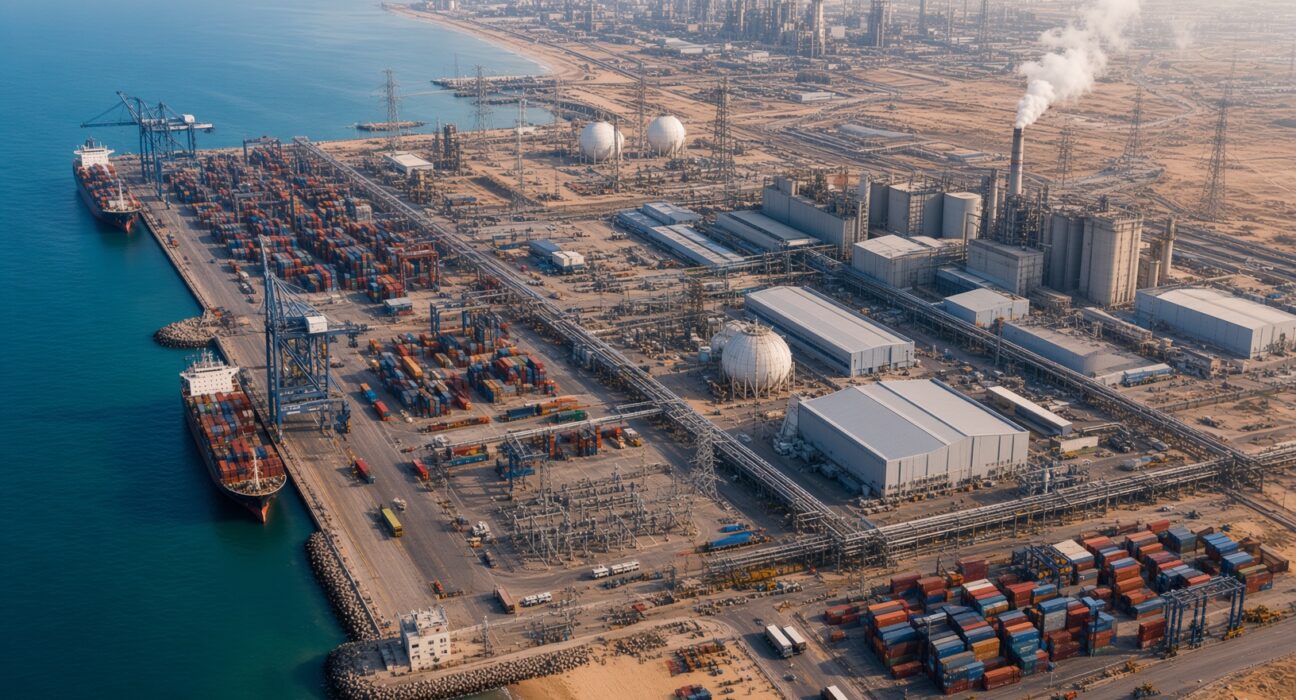
For years, the UAE has been known as the gateway between East and West. It is the place where goods arrive, are redistributed, and move efficiently into markets across the Middle East, Africa and beyond. That role remains as important as ever, but something more significant is happening beneath the surface.
An increasing number of Chinese companies are no longer viewing the UAE simply as a place to move goods through. They are choosing to manufacture here.
This is an important distinction. Trading through a country is transactional, impermanent. Building factories, investing in industrial facilities and putting down long-term roots reflects confidence in the market, a genuine commitment to the region, and a belief that producing closer to customers brings both commercial and strategic advantages.
Trade between China and the UAE has reached record levels, with non-oil trade closing 2025 at USD 111.5 billion and China now firmly established as the UAE's largest trading partner. While those numbers are remarkable, it is no longer really about how much business takes place between the two countries. It is about the type of business. Increasingly, the relationship is built on production, investment and long-term industrial growth, rather than the simple movement of goods from A to B.
The factors pulling manufacturers toward local production
A few different forces are pushing in the same direction here, and together they make a strong case for building locally rather than shipping finished goods in from China.
The first is a shift in buying preference. Government and semi-government buyers across the UAE and the wider Gulf increasingly favour suppliers who can demonstrate local production, not just local distribution. Public procurement rules in the UAE already lean towards UAE-registered and UAE-based suppliers, particularly where comparable quality is available domestically. For a Chinese manufacturer chasing public sector or large private contracts, having a factory address in the UAE carries genuine weight at the negotiating table.
The second force is geopolitics – or, more precisely, a desire to reduce exposure to tariffs. Chinese outbound investment has been steadily shifting away from mergers and acquisitions and towards greenfield manufacturing projects. The logic behind this is sound, as building capacity in a third country is one of the more durable ways to work around trade barriers aimed at goods made in China. That protection does not disappear once the factory is up and running, either. It becomes a permanent feature of the supply chain, rather than something negotiated deal by deal.
This is different from the idea of tariff arbitrage, where companies shifted the final stage of assembly to a third country largely on paper, just enough to change a customs stamp. What is happening in the UAE is more substantial than that. Real facilities are being built, real people are being hired, and production is genuinely rooted here. This is partly because rules-of-origin requirements have become far stricter globally, and partly because manufacturers who go to the trouble of setting up in the UAE tend to want everything else that comes with being here too, not just a change of label.
The third factor is simpler, based on where the UAE sits globally as a place to invest. The country pulled in USD 48.24 billion in foreign direct investment in 2025, the ninth-highest total in the world, making the UAE the leading destination in the wider Middle East, according to UNCTAD's most recent World Investment Report. That is not a modest regional achievement, it’s evidence of a small country holding its own against some of the world's largest economies on the strength of an investment environment that manufacturers, Chinese or otherwise, clearly find easy to work with.
Where the investment is landing
Put those three forces together, and the pattern becomes easy to see. Chinese greenfield investment has become the dominant form of outbound Chinese capital, and the Middle East, with the UAE among the frontrunners, is one of the main beneficiaries.
Ras Al Khaimah, in particular, has become a perfect fit for this kind of activity. Ras Al Khaimah Economic Zone now supports close to 400 Chinese companies working across sectors like recycling, LED lighting, engineering and packaging, and that number has kept growing through a steady run of delegations, roadshows and site visits between Ras Al Khaimah and Chinese industrial cities. It is not only the industrial land and port access that draws manufacturers here, useful as those are - there is also the benefit of having an established Chinese business community. New entrants are not starting from scratch. There are local suppliers to call, a peer network already in place, and other Chinese manufacturers nearby who have already worked through the practical questions of getting set up.
The "Made in UAE" label is evolving
This is where the shift stops being purely operational and starts to look strategic. Previously, the “Made in UAE” designation functioned merely as a technical customs classification, useful mainly for re-export paperwork. Today, qualifying for the label requires a registered facility in a certified industrial zone alongside a meaningful value share of at least 40% added through local manufacturing or assembly.
For a Chinese manufacturer, meeting that threshold turns a customs formality into an actual market access strategy. It opens more doors than shipping finished goods from China, particularly when securing lucrative contracts from government-linked buyers across the UAE and the wider region who actively prioritise domestic manufacturers. Local manufacturing, in other words, has become the essential price of entry into a lucrative market segment that a simple warehouse and a distribution licence could never reach.
A long-term bet, not a hedge
China is betting on the UAE. Setting up a production line, hiring locally, working through UAE industrial licensing and meeting rules-of-origin thresholds takes far more time and money than simply moving finished goods through a free zone. Companies choose that harder path because they intend to stay, and because the UAE has made staying worth the effort through market access, a stable investment environment, and an ecosystem that increasingly speaks their language, sometimes literally.
China and the UAE have evolved from simple trading partners into true industrial allies, ensuring the next chapter of that collaboration will be forged on factory floors across Ras Al Khaimah rather than tracked on logistics schedules.