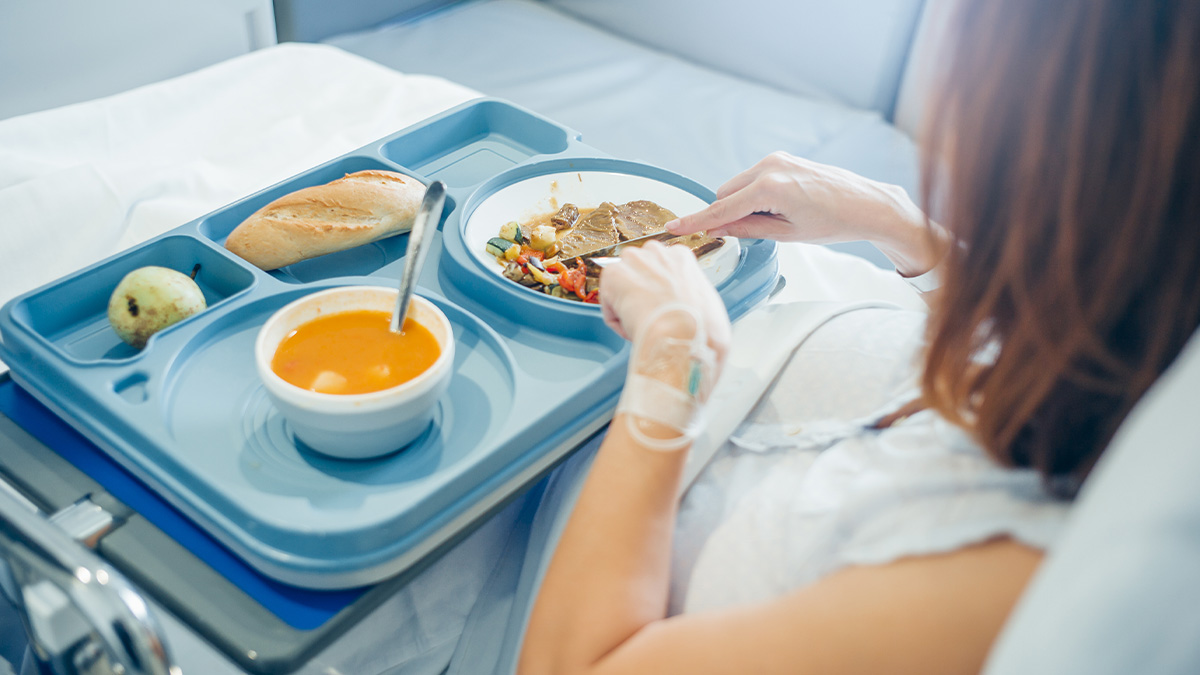
In Dubai's competitive private healthcare market, where local and international patients choose between, what are essentially, clinically equivalent facilities, the differentiator is no longer what care is delivered, it's how it feels to receive it.
Among the most frequent and emotionally charged touchpoints in any hospital stay isn’t doctor care or comfort, it’s food. Not as surprising as it first seems. Meals arrive multiple times daily, and is one of the few moments of personal agency in an otherwise controlled and restricted clinical environment. Despite this, food service remains undervalued: treated as operational overhead rather than what it actually is — a powerful, recurring signal of whether an institution sees patients as people or as cases.
The evidence is unambiguous. Poor food quality isn’t just about a disappointing dinner, it impacts the entire care process. In a healthcare landscape where patient choice drives revenue and reputation, catering is integral to the experience of care, and to the business model that depends on it.
Catering influences patient perception and outcomes
Hospital food is typically written off as overhead — something to be managed, not improved. But the data tells a different story. When patients are unhappy with their meals, they're also more likely to report problems with their care overall, experience complications, and stay in hospital longer. A multi-hospital study published in Clinical Nutrition ESPEN found that patients who didn’t like their food were more likely to report negative outcomes across the board compared to those who said the food was at least acceptable.
There's a clinical dimension too. Poor food service has been linked to higher rates of malnutrition during hospital stays, which slows recovery and extends length of stay. Patients who were more satisfied with what they were eating and how it was served, showed lower malnutrition risk while admitted.
What this suggests is straightforward: food doesn't just affect mood. It shapes how patients experience and recover from care.
Patient satisfaction depends on more than taste
What makes hospital food "good" isn't just whether it tastes acceptable. Research using service-quality frameworks shows that satisfaction is driven by a cluster of factors: food quality, yes, but also perceived value, variety, and, critically, how staff deliver it. Empathy during meal service is as strong a predictor of satisfaction as the food itself.
This matters because these aren't really food issues. They're dignity issues. When a patient is offered a choice, even one limited by dietary restrictions or clinical safety, it reminds them of something important: that they're still a person with opinions and preferences, not just a condition being managed. In an environment where nearly everything else is decided for them, the question "what would you like for lunch?" becomes a small but meaningful restoration of agency.
Hospitals that treat catering as purely logistical are missing the point. The tray isn't just delivering nutrition. It's delivering a message.
Patient satisfaction with hospital catering is multi-factorial. Research using established service-quality frameworks shows that food quality, perceived value, meal variety and staff empathy are all significant predictors of satisfaction.
Importantly, these factors mirror broader expectations about dignity and respect. Choice — even when limited by clinical safety — signals that patients are being listened to at a time when control over many other aspects of life has been surrendered.
Clinical safety and dietary complexity
As we talk about experience, let's be clear: in healthcare catering, safety isn't negotiable. Hospitals serve medically vulnerable people with specific nutritional needs — allergies, texture-modified diets, chronic disease management. Get any of that wrong and you're not just disappointing someone, you're putting them at risk.
UAE healthcare accreditation standards require hospitals to maintain documented systems for safe food preparation, hygiene, balanced nutrition, allergy management and integration with dietetic services. Dubai Health Authority facility guidelines go further, emphasising that catering must address diverse dietary, cultural and religious needs while remaining clinically appropriate.
When these fundamentals fail and meals are incorrect, unsafe or unsuitable, patient confidence collapses, no matter how good the clinical care.
When food becomes clinical risk, not just experience
In hospital kitchens, mistakes aren't just inconvenient. They can be dangerous. Allergy management, food consistency and condition-specific diets are among the most operationally complex and high-risk areas of non-clinical hospital services.
Take allergies. If someone in the kitchen misses a note that should have come from the ward, a patient could end up in serious trouble — and any trust in the system evaporates immediately. This isn't something you can manage with good intentions. It requires clear protocols, proper training and workflows that actually connect clinical and catering teams.
Texture-modified diets are another high-stakes area. Patients who've had strokes, swallowing difficulties or certain surgeries depend on food being prepared to an exact consistency — too thick or too thin and they risk choking or aspiration. Get it wrong once and the consequences are real.
Then there's diabetes. Meals need to arrive on time, and portions need to be consistent, or blood sugar becomes unstable. Miss a meal window or send the wrong portion and you're not just inconveniencing someone, you're potentially slowing their recovery and keeping them in hospital longer.
In Dubai, where healthcare institutions serve international, multilingual populations with vastly different food expectations, managing these risks while delivering culturally appropriate meals requires robust systems and tight clinical alignment. Catering here isn't hospitality. It's part of the care pathway.
And while all of this should be baseline, the reality is that building genuine trust and dependability in this area can still set an institution apart in a fiercely competitive market.
Demographics, culture and religious expectations in Dubai
Dubai’s inpatient population is unusually diverse. Emirati nationals, expatriate residents and international medical travellers bring distinct cultural, religious and personal food expectations. Religious considerations such as halal compliance, pork-free preparation and ingredient transparency are baseline expectations within UAE hospitals.
Hospital catering providers in the UAE routinely incorporate cultural preferences, allergen controls and menu diversity into their operational models to ensure meals feel familiar and supportive during recovery.
Expectations in the premium healthcare market
Dubai’s private healthcare sector increasingly serves higher-middle-income and affluent patients who actively choose where to receive care. For this cohort, clinical competence is assumed. Decision-making is instead shaped by trust, reassurance and alignment with the service standards they experience in luxury hospitality, international travel and premium outpatient care.
Research into private healthcare choice shows that affluent patients use non-clinical cues — environment, service consistency and attention to detail — as proxies for underlying quality, particularly in moments of uncertainty such as hospital admission or surgery . Food service sits squarely within this evaluative framework because it is frequent, personal and highly visible.
In more and more premium institutions, catering is not positioned as an amenity but as an extension of the brand’s clinical philosophy. Menu design, service interaction and presentation are deliberately aligned with values of precision, empathy and reassurance. This may include culturally familiar comfort foods prepared within strict clinical parameters, clearly communicated nutritional information, and hospitality cues such as afternoon tea or enhanced family meal options for long-stay patients.
These touches are not about indulgence. They are about reducing anxiety. Studies in patient experience consistently show that when non-clinical services feel organised and thoughtful, patients infer that the same discipline applies to clinical care. Food becomes a daily reinforcement of competence.
Family members play a critical role in this perception. In private healthcare, families often act as decision-makers, advocates and reviewers. Relatives interpret food quality and meal service as indicators of how well the hospital is managing invisible aspects of care (source). A poorly delivered meal can undermine confidence disproportionately; a well-executed one reassures.
Premium hospitals therefore invest in catering systems that deliver predictability and respect rather than novelty: meals that arrive on time, are clearly appropriate for the patient’s condition, reflect cultural norms, and are served with professionalism. In Dubai, where many patients are far from home, familiar flavours and considerate service can provide emotional grounding during recovery.
In this segment of the market, catering becomes part of the hospital’s brand architecture. It signals organisational maturity, reinforces trust among patients and families, and quietly supports the perception that the hospital is worthy of both confidence and cost.
Technology as an enabler of safety and choice
Digital meal-ordering platforms are increasingly deployed in Middle Eastern healthcare settings to embed dietary safety and patient preferences directly into catering workflows. When integrated with clinical records, these systems reduce errors, improve compliance and increase patient engagement.
Technology is not a luxury in this context, it is a service multiplier that enables consistency at scale.
Experience design: The architecture of differentiation
Differentiation in healthcare catering is rarely about spectacle or culinary indulgence. It's about frictionless, reliable service design that respects the patient's dignity throughout the day.
An experience-oriented catering system is designed around how patients actually live their hospital routine. That means clear communication about when meals will arrive. Predictable delivery that aligns with clinical schedules, not kitchen convenience. Respectful interaction during service — not just polite, but attuned. And menu options that reflect clinical needs, cultural expectations and personal preferences, not just what's easiest to batch-produce.
These aren't marketing gestures. They're operational choices. And research into hospital food service consistently shows that predictability, empathy and perceived value influence how patients judge not just their meals, but the organisation delivering them.
Patients may not consciously articulate these details, but they feel them, and they carry those impressions into their overall assessment of care.
Catering as competitive advantage
When talking about differentiation in catering, it’s easy to think of sophisticated menus, lavish service or unique ingredients, but that is simply not the case. In healthcare markets where clinical competence is assumed, differentiation lives in small, repeated moments that patients remember long after discharge. Catering is an opportunity to show the customer that their agency still matters, that their mental wellbeing is being considered as well as their physical health, and that they are seen as individuals with individual needs.
When hospitals understand meals as part of care, rather than a line item, they reinforce trust, confidence and brand credibility. In Dubai’s private healthcare sector, where patients actively compare experiences and expectations are high, these details matter.
In markets where outcomes converge, it is experience, delivered unobtrusively and consistently, that wins loyalty, reputation and long-term advantage.